
 Adhorika Khan
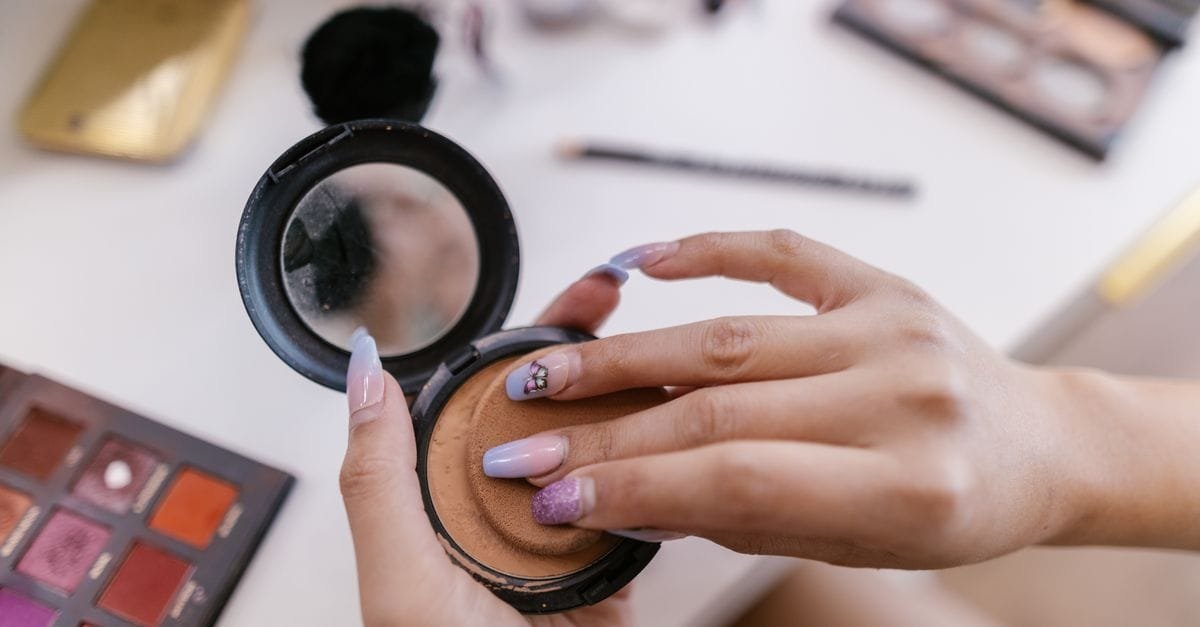
You watched the tutorial, bought the viral foundation, followed every step — and by noon your face looks like it was plastered, sanded, and left to crack in the sun. Cakey makeup is almost never a foundation problem: it’s a skin-prep problem (product grabbing onto dry texture), a quantity problem (too much of everything), or a powder problem (setting what never needed setting). Fix those three and nearly any foundation — drugstore included — wears like skin.
This is the complete fix-it guide: why makeup cakes, the prep routine that prevents it, the application quantities nobody teaches, the midday rescue that doesn’t require starting over, and the honest product-format advice for every skin type.
Key Takeaways
- Cake = product sitting ON skin instead of melding WITH it — and dry, flaky, unprepped skin is cause #1.
- Quantity is the silent killer: most faces need half a pump of foundation — build coverage only where needed.
- Powder is seasoning, not a course: set the T-zone and under-eyes lightly; a full-face powder pass is how “set” becomes “cement.”
- Skincare IS the primer: exfoliated, moisturized, settled skin fixes more cake than any product purchase.
- The midday rescue: blot, mist, press — never add powder to cracked makeup.
What Cakey Actually Means (Know Your Enemy)
“Cakey” is the visible failure of makeup-to-skin fusion: foundation clinging to flakes and fuzz, pooling in pores and creases, layering into a matte crust that photographs even worse than it looks. Diagnose your variant, because the fixes differ: patchy-flaky cake (product grabbing dry texture — a prep problem), heavy-mask cake (too much product — a quantity problem), creased-and-cracked cake (movement zones over-set — a powder problem), and afternoon cake (oil breaking through layers — an oil-management problem). Most faces run a blend, and the routine below addresses all four in order.
Fix 1: The Skin Underneath (80% of the Battle)
Foundation is a thin pigmented film — it can only be as smooth as the surface under it. The prep protocol: exfoliate the texture away on schedule (gentle chemical exfoliation per our exfoliation guide — flakes are cake’s scaffolding; and monthly dermaplaning is the deluxe version of this fix); moisturize and let it SETTLE — the skipped detail: moisturizer needs five-plus minutes to absorb before foundation, or the two mix into slide-off sludge (do skincare first, then breakfast, then makeup — the sequencing hack that costs nothing); target hydration if you’re dehydrated (a quick flooding round before makeup transforms how foundation sits on thirsty skin); and SPF counts as a layer — let it form its film for two minutes too (SPF guide). Primer verdict, honestly: a targeted primer (pore-blurring on the T-zone, hydrating on dry cheeks) helps; a mandatory all-over primer layer is often just… another layer. Skin prep beats primer purchase.
Fix 2: Quantity and Application (The Half-Pump Revolution)
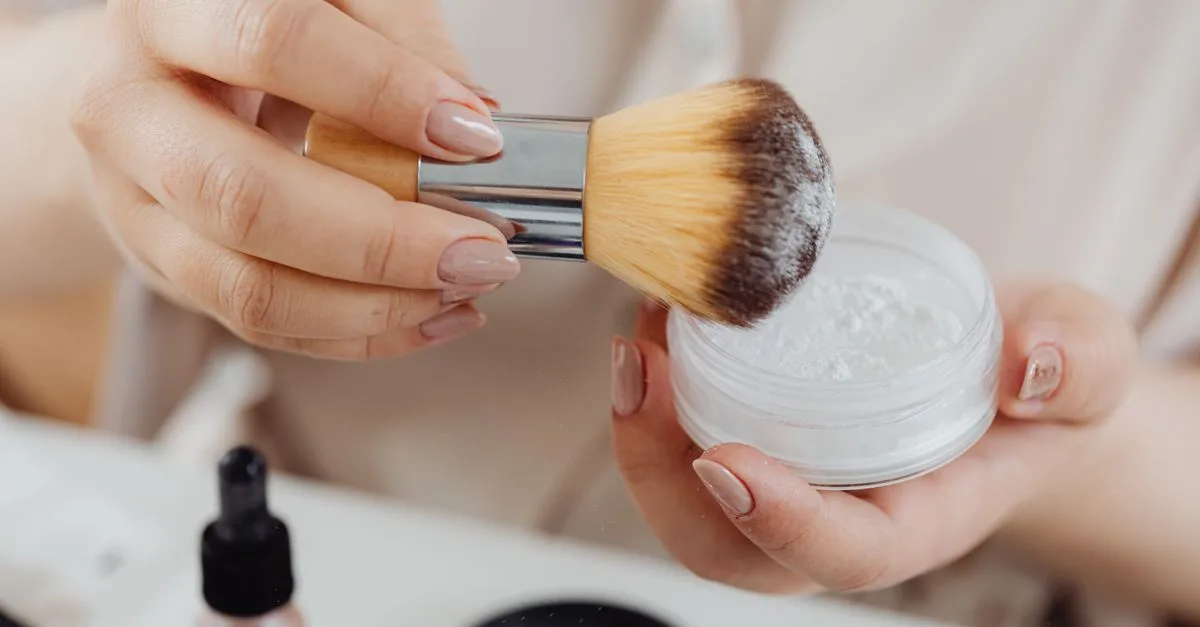
Start with half of what you use now. Most cakey faces are wearing two to three faces’ worth of foundation — modern formulas are pigment-dense, and coverage builds far better than it subtracts. The method: half a pump warmed between fingers or on the back of the hand, applied first where coverage matters (center face, redness, marks), then blended outward to nothing at the hairline and jaw — the perimeter of your face needs almost no product.
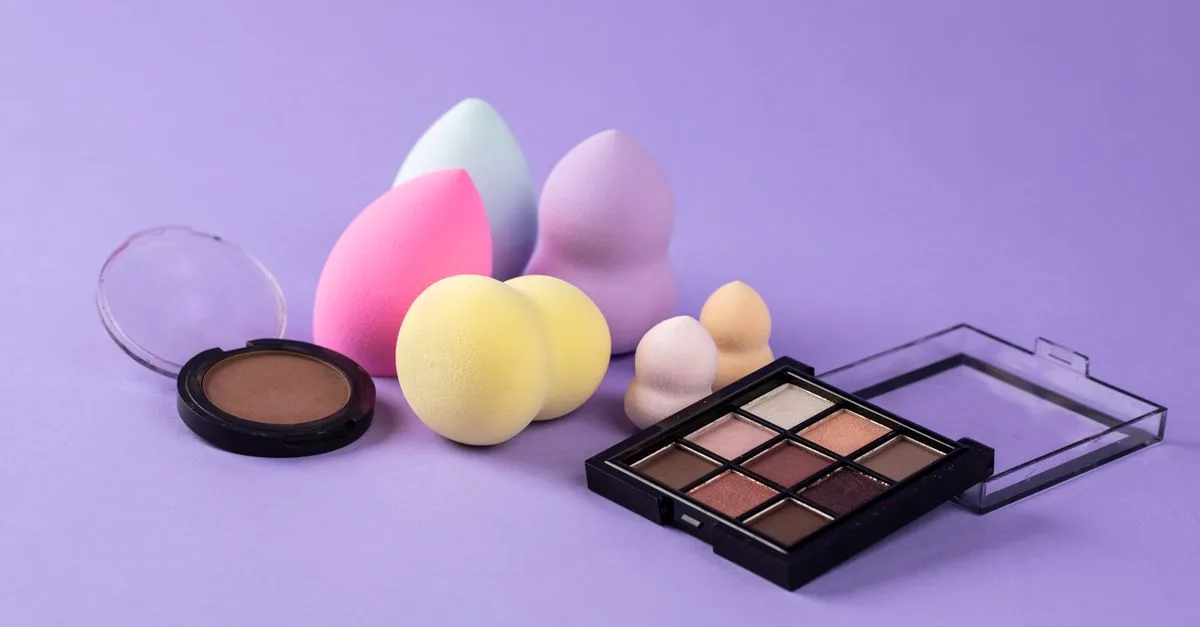
Tools change thickness: a damp (never dry) sponge presses foundation thin and sheer — the single best anti-cake applicator (a dry sponge drinks product and deposits it in patches; the sponge-vs-brush comparison goes deeper); dense brushes buff medium coverage; fingers work fine for sheer formulas (warmth melts product into skin). Whatever the tool: press and roll, don’t wipe — wiping streaks; pressing fuses. Spot-conceal instead of second-coating: a precise dab of concealer on the blemish beats another full layer of foundation everywhere (and clean tools, always — a gunked sponge applies gunk; the brush hygiene rules are also cake rules).
Fix 3: Powder Discipline (Set, Don’t Cement)
Powder’s job is locking movement zones and killing shine where you shine — not frosting the entire face. The protocol: a light dusting on the T-zone and a pressed veil under the eyes, applied with a big fluffy brush or — for creaseless under-eyes — a barely-loaded puff pressed and rolled. Skip powder entirely on dry zones (cheeks, around the nostril creases) — matte dry skin is cake’s natural habitat. Choose finely-milled translucent over heavy pigmented pressed powders for setting (pigmented powder is another coverage layer wearing a setting costume). And the age note: powder magnifies texture on mature skin — the less-is-more dial turns further with every decade; cream products and setting spray increasingly replace powder’s job. (Expired, hardened powders also apply patchy — the expiry rules are quietly relevant here.)
Fix 4: The Layer Economy
Count your face’s current layers: moisturizer, SPF, primer, foundation, concealer, cream blush, powder, bronzer, powder blush, highlighter, setting spray — eleven films, each interacting with the ones below. Cake is often just layer arithmetic. The economies: multi-tasking products (tinted moisturizer or skin tint on good-skin days; cream blush doubling as lip color), cream-on-cream then powder-on-powder — the texture-order rule: creams (blush, bronzer, concealer) go on before any powder; dragging cream over powder curdles both; one coverage decision per zone — foundation OR concealer heavy-lifting per area, not both at full strength; and the finishing mist — a fine setting spray melds powder edges back into skin, the single best “make it look like skin again” final step (hold distance; a soaked face is a different problem).
The Midday Rescue (Never Start Over)
Afternoon cake — oil breaking through, creases mapping, nose going patchy — has a three-step fix that takes ninety seconds and zero removal: 1. Blot first — blotting paper (or a single-ply tissue pressed flat) lifts the oil that’s deconstructing your base; never powder over unblotted oil (that’s the paste recipe). 2. Mist — one pass of setting spray or even a hydrating mist re-melts the crust edges. 3. Press and re-blend — with a clean sponge or fingertip, press the softened makeup back into skin, spot-fixing the creases; a fingertip of moisturizer patted on flaky patches dissolves them into the base. Then, if genuinely needed, the lightest veil of powder on the T-zone only. (SPF top-up hour? The cushion-and-spray methods layer into this rescue seamlessly.)
Cake by Skin Type: The Tailored Notes
Dry skin: your cake is prep-cake — exfoliation cadence, real moisturizer settle-time, hydrating (never matte) formulas, powder almost nowhere, cream everything. Oily skin: yours is breakthrough-cake — lighter base layers (oil + heavy matte foundation = afternoon paste), gel moisturizer, targeted T-zone powder, blotting papers as EDC, and honestly better skincare oil-management upstream (the washing and BHA basics). Combination: zone the strategy — matte logic for the T, hydrating logic for the cheeks; one foundation, two treatments of it. Mature skin: texture-magnification is the enemy — less product, luminous-not-matte formulas, cream color products, powder only where movement demands, and the mist finish doing heavy lifting. Textured/acne-prone skin: thin layers always (thick coverage over texture reads MORE textured), spot-conceal precisely, and never let makeup postpone the treatment routine that shrinks what needs covering.
The Camera Test: Why Photos Exaggerate Cake
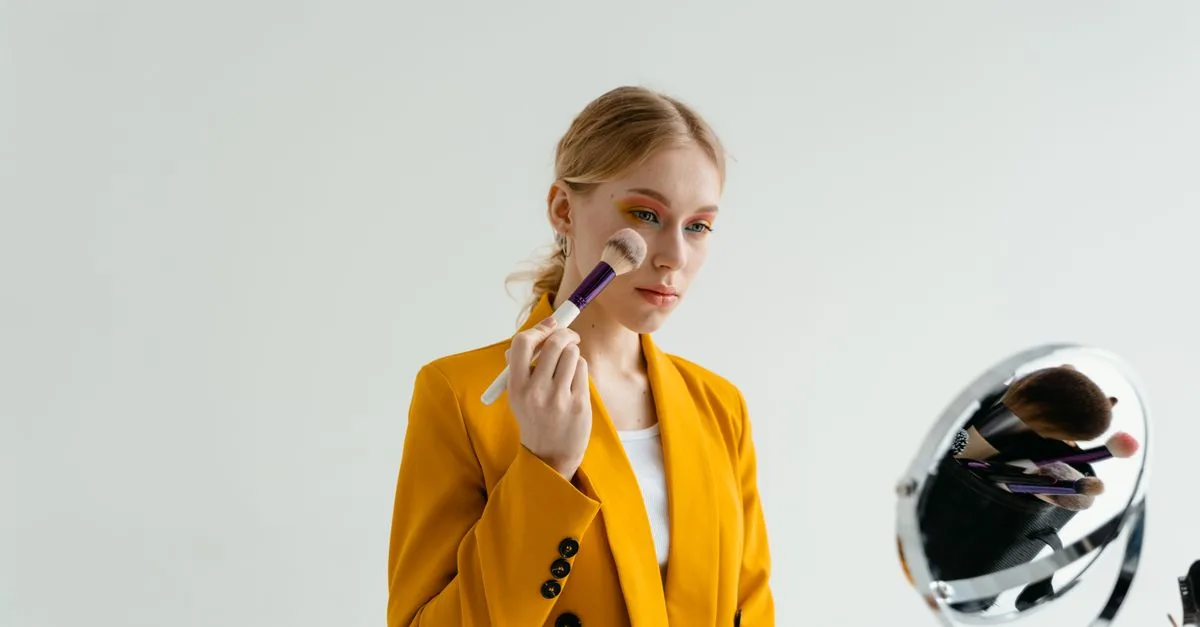
Makeup that looks fine in the mirror and terrible in photos isn’t a mirror lie — it’s physics. Flash and harsh directional light rake across texture, shadowing every flake and pore-pooled patch; some SPF filters and heavily mica-loaded powders bounce light back as ghostly flashback; and phone cameras’ sharpening algorithms treat powder grain as detail to enhance. The pre-event protocol: take a flash photo in your bathroom before leaving — it’s the brutal honest preview; thin layers photograph better than full coverage, always (cameras add visual weight to product the way they famously add pounds); mist as the final step melts the powder grain that sharpening algorithms feast on; and for photographed events specifically, set with restraint and carry the blot-mist-press kit — a rescue at hour three beats a fortress at hour zero. The mirror flatters; the camera audits; prep for the auditor.
The Cake-Proof Starter Kit
Building from zero, the anti-cake arsenal is five items: a damp-use makeup sponge (and the discipline to actually dampen it), a skin-tint or light-coverage foundation in your correct undertone (coverage you build beats coverage you thin), one finely-milled translucent powder, a setting spray doing double duty as midday rescuer, and blotting papers living in every bag. Deliberately absent: full-coverage foundation as a daily default (it’s occasionwear), heavy pressed powders, and any primer bought before the skincare underneath was sorted. Total cost: modest — because cake was never an underspending problem. Pair the kit with the prep routine and the half-pump rule, and “cakey” exits your vocabulary at every price point.
When Cake Is a Skin Message, Not a Makeup Problem
One honest closing diagnostic: if makeup cakes despite good prep, sane quantities, and powder discipline, the skin underneath may be filing a complaint. Persistent flaking that returns days after exfoliating points to a stripped barrier or genuine dryness needing repair, not coverage; texture that catches product may be KP, congestion, or retinoid adjustment; and makeup that suddenly cakes after years of behaving usually follows a skincare change — or an expired bottle. Two weeks of barrier-first skincare with minimal makeup often fixes “unfixable” cake entirely, because the canvas was the problem all along. Makeup renders the skin it’s given; when the rendering fails repeatedly, upgrade the skin, not the spackle.
The Bottom Line
Cakey makeup is a systems failure with a systems fix: smooth hydrated skin underneath, half the product you think you need, powder deployed like seasoning, layers counted honestly, and the blot-mist-press rescue in your bag for 3 p.m. None of it requires new products — most of it requires using less of the ones you own. The goal was never full coverage; it was your skin, continued.
The anti-cake kit:
The anti-cake kit:
Frequently Asked Questions
Why does my foundation look cakey?
Three usual suspects: foundation grabbing onto dry, unexfoliated texture; too much product (most faces need half a pump); or over-powdering. Skin prep, quantity discipline, and T-zone-only powder fix the vast majority of cases.
How do you fix cakey makeup without starting over?
Blot the oil first, mist with setting spray, then press the softened makeup back into skin with a clean sponge or fingertip — moisturizer dabs dissolve flaky patches. Only then, a light powder veil where truly needed.
Does primer stop cakey foundation?
Sometimes — targeted primers (pore-blurring T-zone, hydrating cheeks) help specific problems. But well-prepped skin beats primer: exfoliated, moisturized, and given five minutes to settle before foundation prevents more cake than any primer purchase.
Why does my makeup look cakey only under my eyes?
The under-eye combines thin creasing skin, concealer, and powder — the cake trifecta. Use less concealer (thin layers, pressed in), set with a barely-loaded puff of finely-milled translucent powder, and re-melt with a mist.
Is it better to apply foundation with a brush, sponge, or fingers?
For avoiding cake: a damp sponge, pressed and rolled — it sheers product into skin. Dense brushes buff medium coverage well; fingers suit sheer formulas. Whatever the tool, press rather than wipe, and keep it clean.
Should I powder my whole face?
Almost never — powder locks the T-zone and under-eyes; on dry cheeks and around the nose it manufactures texture. Finely-milled translucent, lightly loaded, only where you crease or shine.
Why does my makeup get cakey by the afternoon?
Oil breaking through the layers deconstructs the base. Blot before any touch-up (powder over oil makes paste), keep base layers lighter in the first place, and manage oil upstream with skincare rather than downstream with more powder.
Does setting spray really help with cakey makeup?
Genuinely — a fine mist melds powder edges back into skin, killing the dusty, sitting-on-top finish. It’s both the best final step and the core of the midday blot-mist-press rescue.
Why is my foundation cakey around my nose?
The nostril creases combine dryness, movement, and oil — the perfect storm. Exfoliate the flakes on schedule, apply the thinnest foundation layer there (pressed with a damp sponge), and skip powder in the creases entirely.
Is cakey makeup caused by expired foundation?
It can contribute — separated, oxidized, or thickened foundation applies patchy no matter the technique. If a longtime formula suddenly cakes, check its age and shake-test before overhauling your routine.
What foundation finish is least cakey?
Natural and luminous finishes forgive texture; full-matte formulas show every flake and demand perfect prep. Skin tints and light-coverage bases built up only where needed are the structural anti-cake choice.
Does drinking water help cakey makeup?
Only indirectly — surface dehydration is a skincare problem solved by humectants and moisturizer, not the water bottle. A pre-makeup hydration routine fixes flake-cake far faster than internal hydration alone.
How do I stop concealer from caking under my eyes?
Thin layers pressed with a fingertip or damp sponge tip, a barely-loaded powder puff to set only the crease zone, and a mist to melt it in. Hydrated under-eyes first — concealer over dry creases cakes on contact.

 Adhorika Khan


1 comment
Nội dung hay và thực tế. Letco là đơn vị du học Hàn Quốc giàu kinh nghiệm, đồng hành cùng học viên từ A-Z. Ghé letco.vn để được tư vấn miễn phí.