
 Adhorika Khan
Somewhere right now, a product is promising to “repair” your split ends, and your ends are calling its bluff. Here’s the truth the fine print whispers: a split end cannot be permanently fused back together — once the fiber splits, the only true fix is the scissors. What products genuinely can do: temporarily seal splits shut (hours to a wash), make ends look dramatically better, and — the part that matters — prevent the next generation of splits entirely.
This is the honest complete guide: why ends split, the four split types and what each says about your habits, what “repair” products actually do, the trim strategy that keeps length, and the prevention system that makes splits rare instead of routine.
Key Takeaways
- Splits are permanent: the strand’s protective cuticle wore away and the inner fiber frayed — no product re-welds dead protein.
- “Repair” products are temporary glue: real cosmetic benefit, honest until the next wash — and genuinely useful for prevention.
- Unremoved splits travel upward — today’s 5mm split is next month’s 5cm tear; trims protect length, not sabotage it.
- Splits are a habits report: heat, friction, rough brushing, and elastic abuse each print their signature type.
- The dusting technique removes splits while keeping length — the growth-journey compromise.
What a Split End Actually Is
A hair strand is a rope: an inner cortex of keratin bundles wrapped in the overlapping cuticle scales that porosity fans know well. At the oldest part of the strand — the end, which has survived years of washing, brushing, heat, and weather — the cuticle eventually wears through entirely. Unwrapped, the cortex fibers separate: the rope frays. That’s a split (trichoptilosis, if you’re collecting terms).
Two facts follow directly. First, hair is dead — the same honest foundation as our damaged hair guide — so a split cannot heal; the fiber has no biology to heal with. Second, a split keeps splitting: the fray travels up the shaft along the weakened line, which is why a neglected split costs more length than the trim that would have removed it.
The Four Split Types (and What Each Confesses)
Look closely at your ends in good light — the shape is a diagnosis. The classic Y: basic wear-and-tear split; age plus friction; the universal type. The feather/tree: multiple splits along one strand — significant cumulative damage, usually chemical (bleach) plus heat; your hair is asking for the repair guide’s full protocol. The incomplete split (a hole or thin spot mid-strand): a split in progress — bending weakness before separation; heat and elastics are the usual authors. The white dot: a break point where the cortex crumbled — snapping follows; classic heat damage signature. Feather and white-dot patterns mean the problem is upstream habits, not end-care — trims will Sisyphus forever until the cause changes.
What “Split End Repair” Products Really Do
The honest mechanism tour: silicone serums and oils coat the frayed end and temporarily stick the fray together — genuine visual improvement, gone at the next wash; think cosmetic stitch, not surgery. Bond-building treatments (the bleach-era heroes) reinforce weakened bonds within not-yet-split hair — legitimately useful for preventing splits in damaged hair, unable to reunite an already-split end. Protein treatments patch thin cuticle spots temporarily — prevention again. “Split end menders” with heat activation — stronger temporary welds, same impermanence.
The pattern: everything works before the split or cosmetically after it; nothing reverses it. Buy these products as prevention and polish — never as an alternative to the trim.
The Trim Strategy: Keeping Length AND Losing Splits
The great fear — “trims steal my growth” — has the math backwards: hair grows at the root (~1.25cm/month) regardless of what happens at the ends; untrimmed splits travel upward and eventually snap off more length than the trim would have taken. Growth journeys are won by retention, and splits are retention’s enemy.
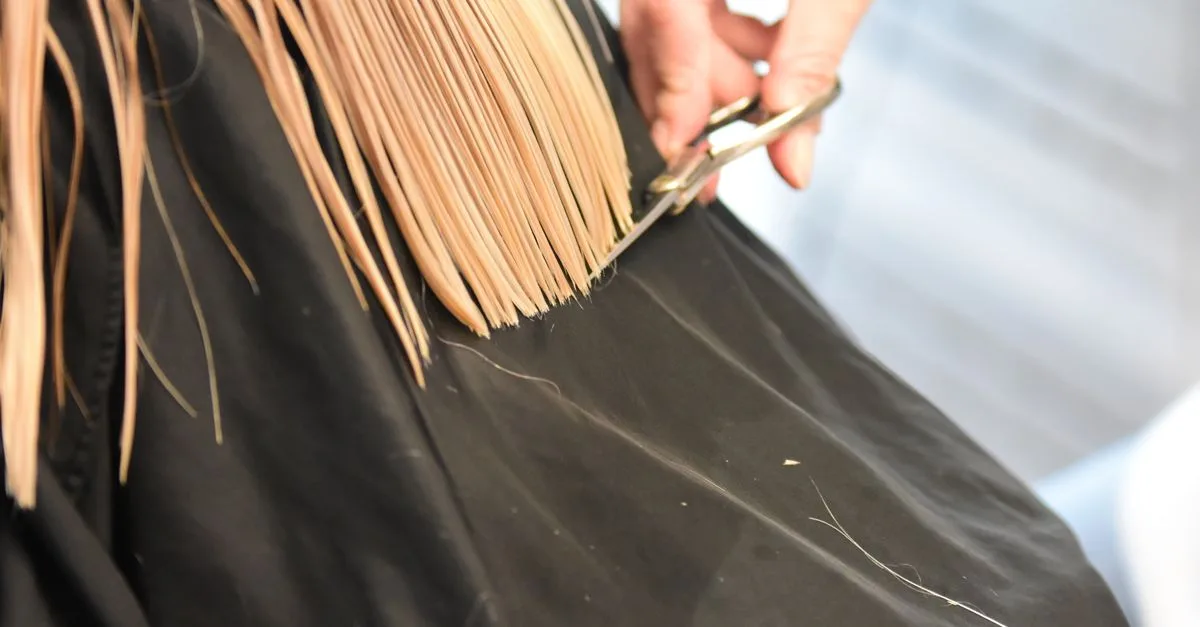
The schedule: healthy hair, every 10–12 weeks, taking 6mm; heat-styled or color-treated hair, every 8 weeks; actively growing length, micro-trims (3mm) on the same schedule — you keep net growth while staying ahead of the fray. Dusting — twisting small sections so splits poke out, snipping just the visible frays — removes damage with almost zero length cost; excellent between real trims, done with proper hair shears only (paper scissors crush and cause the next split — the one tool investment this topic demands). Search-and-destroy — individually snipping spotted splits 5mm above the damage — suits the patient; do it in daylight, with sharp shears, and accept it complements rather than replaces trims.
Prevention: Where the Real Victory Lives
Splits are manufactured by repeated small violence; prevention is removing the machinery.
Heat discipline: protectant before every hot tool, temperatures under 180°C for fine hair, and honest heat rationing — the protectant roundup covers the toolkit; air-dry days cover the rest.
Friction control: satin or silk pillowcases (cotton grabs and frays ends nightly), microfiber or t-shirt hair drying (never the terry-towel turban-twist on soaking hair), and loose containment on windy days — friction is the quiet co-author of most Y-splits.
Mechanical manners: detangle ends-first with conditioner in, wide-tooth combs on wet hair (wet hair stretches and snaps), and elastics without metal parts, never snapped over the same spot daily — the incomplete-split assembly line.
Moisture and seal maintenance: conditioned, sealed ends resist fraying like moisturized leather resists cracking — leave-in on the last third of your hair after washes, and the porosity-matched version of sealing for your hair type. Ends are the oldest, driest hair you own; feed them accordingly.
Chemical realism: every bleach session weakens the rope — space sessions, bond-build during them, and accept that platinum ambitions and knee-length ambitions rarely coexist.

The Ends-Care Daily Routine (90 Seconds)
Post-wash: leave-in conditioner on the bottom third, gentle squeeze — never wring. Styling days: protectant, then a drop of serum or oil sealing the last few centimeters. Nightly: loose braid or silk-scrunchie pineapple for length; satin pillowcase doing silent work. Weekly: a mask session for the mid-lengths-to-ends (the mask roundup matched to your porosity). Monthly: a good-light ends inspection — catching the fray early is the whole economy of this topic. None of it is glamorous; all of it is why some people’s ends look cut yesterday for months at a time.
Split Ends by Hair Type: The Tailored Notes
Fine hair: splits fastest (thinner rope, fewer cuticle layers) — lowest heat, gentlest elastics, most frequent micro-trims. Thick/coarse hair: more structural tolerance but hides splits in volume — schedule inspections, don’t await visibility. Curly and coily hair: every curve is a mechanical stress point and natural oils travel slowly down the spiral — sealed ends, protective styles worn loosely, and extra caution detangling; splits at the curves masquerade as “shrinkage” and single-strand knots travel with them. Color-treated and bleached: you’re on the 8-week trim clock with bond-builders as standing infrastructure — the chemistry pre-weakened the rope; the maintenance is the rent.

Myths That Keep the Fray Alive
“Split end repair serums fix splits” — they glue temporarily and prevent honestly; the split remains under the polish. “Trimming makes hair grow faster” — growth happens at the follicle; trims protect what grew. Both halves of the myth-pair are wrong in opposite directions. “Burning off splits (velaterapia) works” — the candle-flame salon stunt creates heat damage to treat heat damage; hard no. “Natural hair doesn’t split” — every fiber frays; textures just fray differently. “100 brush strokes a day” — Victorian friction folklore; that’s a split-manufacturing protocol with heritage branding.

Talking to Your Stylist About Splits (The Script)
Salon communication decides whether “just a trim” costs six millimeters or six centimeters. The working script: “dust the ends — take the minimum that removes the splits, and show me first” sets both the goal and the checkpoint. Ask what they see: a good stylist will tell you honestly whether your splits are trim-level or whether damage runs higher (feathering mid-shaft changes the conversation). If you’re growing length, say so explicitly — “growing out, maintenance trims only” is a recognized instruction, and micro-trim or dusting requests are routine, not precious. And the scheduling hack: book the next trim before leaving — the 8–10 week rhythm survives on calendar automation, not memory. A stylist who dismisses length goals or takes double the discussed amount is answering a question you didn’t ask; the relationship, like the ends, sometimes needs a clean cut.
The Growth-Journey Math, Shown Honestly
Numbers convert trim-skeptics: hair grows ~1.25cm monthly = ~3.75cm per quarter. A quarterly 6mm maintenance trim nets +3.15cm of healthy length per quarter. Skipping trims for a year, then losing 5–8cm to traveled splits and breakage (the standard outcome) nets LESS annual length than the trimmed schedule — with worse-looking ends throughout. The spreadsheet answer to “trims slow my growth journey”: untrimmed splits are the slowest route to long hair that exists, second only to bleach-without-aftercare. Retention is the game; the scissors are on your team.
The Bottom Line
Split ends are the honest tax on hair’s years of service — unfixable by chemistry, removable by scissors, and largely preventable by habits. Trim on schedule (small and often beats dramatic and rare), seal and soften the ends daily, discipline the heat and friction, and let the “repair” aisle serve as the prevention-and-polish department it actually is. Length comes from retention; retention comes from ends that never get the chance to fray.
The ends-defense kit:
The ends-defense kit:
Frequently Asked Questions
Can split ends be repaired?
Not permanently — once the fiber splits, no product re-fuses dead protein. Serums and menders temporarily seal the fray until the next wash; the only true fix is trimming, and the real win is preventing the next split.
Do split ends stop hair growth?
They don’t touch growth (that happens at the follicle) — but untreated splits travel up the strand and snap off length, which is why hair “stops getting longer.” Trims protect net length; splits steal it.
How often should I trim to avoid split ends?
Every 10–12 weeks for healthy hair, every 8 for heat-styled or color-treated hair — taking as little as 3–6mm. Micro-trims on schedule keep growing hair ahead of the fray with almost no length cost.
What causes split ends the most?
Cumulative small violence: unprotected heat styling, cotton-pillowcase friction, rough wet brushing, metal-banded elastics, and chemical processing. The split type often identifies the culprit — white dots say heat; feathering says bleach.
Is it bad to pick or peel split ends?
Yes — peeling a split tears it further up the healthy shaft, converting a trim-sized problem into a breakage-sized one. Snip spotted splits with sharp hair shears 5mm above the damage instead.
Do bond builders fix split ends?
They reinforce weakened bonds inside not-yet-split hair — genuinely valuable prevention for bleached and damaged hair — but they cannot reunite an already-split end. Prevention tool, not time machine.
What is hair dusting?
A length-preserving technique: twist small sections so damaged ends poke out, then snip just the visible frays with proper shears. It removes splits with millimeter-level length cost — ideal between full trims for growth journeys.
Can I cut my own split ends at home?
Dusting and search-and-destroy, yes — with proper hair shears, good light, and modest ambitions. Full trims and shape maintenance still belong to the salon; home scissors on wet hair in bathroom lighting is how uneven ends happen.
Do silk pillowcases prevent split ends?
They reduce the nightly friction that frays ends — a real contribution, especially with a loose braid on top. They’re prevention support, not a substitute for trims, protectant, and gentle handling.
Why do I get split ends so fast after a trim?
The manufacturing habits survived the trim: unprotected heat, cotton friction, rough detangling, or tight elastics resumed immediately. Fix the upstream causes or the fray returns on schedule — the trim removes damage; habits prevent it.
Does hair type affect split ends?
Yes — fine hair splits fastest, curly and coily hair splits at curve stress points and hides it in texture, and bleached hair of any type splits soonest of all. Every type benefits from the same prevention stack, tuned to its fragility.
Are split ends a sign of unhealthy hair?
They’re a sign of OLD hair meeting friction, heat, and time — every head produces some. Frequency is the signal: constant new splits point at fixable habits; occasional ones are just mileage.
Do supplements prevent split ends?
Splits happen to the dead, already-grown fiber — supplements can’t reach it. Adequate protein and general nutrition support the NEW hair being built; scissors and gentler habits handle the rest.
And the gentlest closing reminder: ends are the oldest part of your hair’s story — a little daily kindness there outperforms every dramatic rescue, and the scissors were never the enemy; they were the editor.


 Adhorika Khan