 Adhorika Khan
Vitamin E might be skincare’s most familiar stranger: it’s in practically every moisturizer you own, your grandmother swore the capsules erased scars, and almost nobody can say what it actually does. Vitamin E (tocopherol) is a fat-soluble antioxidant that protects skin lipids from oxidation, supports the moisture barrier, and famously teams up with vitamin C to boost sun protection. It is a genuinely useful supporting ingredient — and the scar-healing folklore attached to it is largely myth, with a real dermatology literature politely saying so.
This dictionary chapter gives vitamin E its honest due: what it does well, the famous C+E partnership, the scar myth’s actual history, who should seek it out, who should avoid it, and why you probably don’t need to buy it separately at all.
Key Takeaways
- Vitamin E is a lipid-guarding antioxidant — it protects the oils in your skin (and in your products) from oxidizing.
- Its best work is teamwork: vitamin C + E together famously outperform either alone under UV stress.
- The scar myth is busted: studies show vitamin E doesn’t improve scars — and causes contact dermatitis in a meaningful minority.
- You already own it: tocopherol is in most moisturizers, sunscreens, and oils as both ingredient and preservative.
- Breakout-prone skin: pure vitamin E oil is heavy and comedogenic-leaning — formulas beat straight oil.
What Is Vitamin E, Exactly?
“Vitamin E” is a family of eight related fat-soluble molecules; skincare almost always means alpha-tocopherol (or its stabilized ester, tocopheryl acetate — the label name to recognize). Your skin stocks it naturally, concentrated in sebum and the lipid mortar between cells — it’s literally part of the barrier system, arriving via oil glands and depleting with sun exposure and age.
Its defining talent: it’s a chain-breaking antioxidant for fats. When UV light and pollution generate free radicals, those radicals attack skin lipids in destructive chain reactions — vitamin E sacrifices itself to break the chains. Water-based antioxidants (like vitamin C) can’t patrol the lipid neighborhoods; vitamin E lives there. That fat-solubility is the key to everything it does — and everything it doesn’t.
What Vitamin E Genuinely Does
Antioxidant defense in the lipid layer: the day-shift job — mopping up UV- and pollution-generated radicals before they age the barrier’s fats. Moisturization support: tocopherol is a decent emollient that softens and supports the barrier — part of why E-containing moisturizers feel nourishing. Product preservation: unsung but universal — vitamin E keeps the other oils in your products from going rancid; half its appearances on your ingredient lists are as formula bodyguard. Photoprotection support (with friends): not a sunscreen, but a legitimate force-multiplier under one — next section.

The Famous Partnership: Vitamin C + E (+ Ferulic)
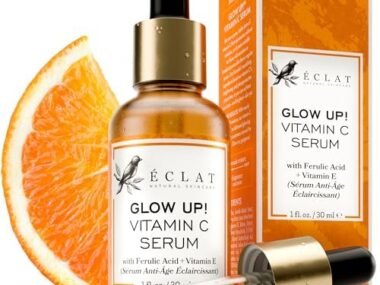
The most cited fact about vitamin E is a genuine classic of dermatology research: vitamins C and E together provide roughly double the photoprotection of either alone, and adding ferulic acid roughly doubles it again — the study behind an entire generation of C-E-Ferulic serums. The mechanism is elegant: C patrols the watery compartments, E patrols the fats, and C actually recycles spent E back into service; ferulic stabilizes them both.
The practical translation: the best way to “use vitamin E” is a morning antioxidant serum containing C + E together, under sunscreen — the antioxidant layer catches the radicals that sneak past the SPF (our vitamin C guide and SPF guide complete the trio’s paperwork). Buying E separately to layer under a C serum is solving a problem the formulators already solved.
The Scar Myth: A Folklore Autopsy
The advice to prick a vitamin E capsule and massage it into scars is generations old, universal — and studied. The results are dermatology’s polite embarrassment: controlled trials found vitamin E no better than plain emollient for scar appearance, one frequently-cited surgical study found it made no difference or slightly worsened outcomes — and, strikingly, around a third of participants in that study developed contact dermatitis from the vitamin E itself.
What actually helps scars and marks: silicone sheets for raised scars, sun protection and time for the flat ones, and the full evidence-based program in our acne scars guide. What the capsule ritual actually provided: massage (mildly useful for some scars) and occlusion (any ointment does it) — the E was a passenger. Folklore verdict: retired with honors, and with a rash warning.
Who Should Seek Out Vitamin E — and Who Should Avoid It
Seek it (in formulas): dry and mature skin (the emollient-antioxidant combo suits declining sebum — remember, your natural E supply rides on your oil production), anyone building the morning C+E antioxidant layer, and outdoor-lifestyle skin wanting maximum photodefense stacking. Neutral: almost everyone else — you’re getting maintenance doses in your existing moisturizer and sunscreen whether you know it or not. Approach with caution: breakout-prone and fungal-acne-prone skin (pure E oil is heavy, rich, and a known Malassezia feeder — formulas at low percentages are usually fine; the straight capsule oil is not your friend), and the contact-dermatitis-prone — vitamin E is a recurring patch-test culprit, so new E-heavy products get the behind-the-ear trial like anything else.
Topical vs Dietary: Where Vitamin E Actually Matters Most
Honest perspective paragraph: vitamin E’s most important work in your skin comes from eating it — nuts, seeds, vegetable oils, leafy greens deliver it to skin via sebum continuously. Genuine deficiency is rare in developed countries; supplementing beyond needs shows no skin benefit in studies (and high-dose E supplements carry real health cautions — that’s doctor territory, not beauty-aisle territory). The dietary translation: a handful of almonds does more baseline vitamin E work than most serums; the topical layer is targeted reinforcement, not the supply chain. As with every “beauty from within” category: food first, targeted topicals second, megadose capsules basically never without medical reason.

Reading Vitamin E on a Label
Tocopherol = the active form (more potent, less stable); tocopheryl acetate = the stabilized ester (gentler, most common, converts partially in skin); tocotrienols = the exotic cousins with interesting early research and premium pricing. Position tells the story: E near the end of the INCI list is doing preservative duty (fine, universal); E featured mid-list in an antioxidant serum is doing treatment duty. “Natural vs synthetic” (d- vs dl- prefixes) matters for supplements more than topicals — skin is not fussy about the source. And percentage-chasing is misplaced here: effective topical concentrations are low single digits; “pure vitamin E oil” at 100% is not ten times better, just ten times heavier — and back to the comedogenic warning.
How to Use It (Three Honest Routes)
Route 1 — the default: do nothing; your moisturizer and SPF already carry maintenance E. Route 2 — the antioxidant upgrade: a morning C+E(+ferulic) serum under sunscreen — the single highest-value way to add E deliberately, especially for outdoor-heavy lives. Route 3 — the dry-skin enrichment: E-rich moisturizers and facial oils at night for dry and mature skin wanting the emollient bonus (our face oils guide covers the vehicle question). What’s deliberately absent: the capsule-on-scars ritual (retired above), E as acne treatment (no evidence, wrong direction), and standalone E serums as anti-aging heroes (the partnership is the point — solo E is a bodyguard without a client).

Vitamin E Beyond the Face: Lips, Hair, Hands, and Body
The lipid-guard resume extends everywhere fats need defending. Lips: E appears in half the balm aisle for both jobs at once — emollient comfort and keeping the balm’s own oils fresh; entirely sensible (our lip guide’s allergy caveat applies to E-heavy formulas on sensitive lips). Hair: E-rich oils (argan famously) coat and protect strands — cosmetically real, structurally cosmetic, per the hair honesty rules; scalp benefits track the general oil logic, including the dandruff caution. Hands and body: E-enriched creams suit the dry zones well — the same emollient-antioxidant pairing, cheapest at body scale. Cuticles: vitamin E oil is a classic cuticle treatment that genuinely works — though jojoba does the same for less, per the nail routine. The unifying rule: E excels wherever oils already belong; it disappoints wherever folklore promised transformation.
The Preservation Story: E as Your Products’ Bodyguard
The least glamorous, most universal vitamin E job deserves its own section: oxidation is what kills skincare — oils go rancid, actives degrade, textures shift — and tocopherol at fractional percentages is the industry’s favorite brake on that decay. Practical implications for you: E’s presence at the tail of an ingredient list is a good sign in any oil-containing product (someone formulated for shelf life); products WITHOUT antioxidant protection — especially DIY blends and “preservative-free” boutique oils — age on the fast clock our expiry guide describes; and the sniff test that governs your face oils is really a vitamin-E-depletion test — when the E runs out, rancidity begins. You’ve been benefiting from vitamin E daily for years; it just never got the credit line.
The Sixty-Second Summary
Buy vitamin E deliberately in exactly one place — the morning C+E+ferulic serum under sunscreen — and enjoy it incidentally everywhere else, where formulators already put it. Skip the capsules on scars, the megadose supplements, and the straight oil on breakout-prone skin. E is the bodyguard of skincare: essential, everywhere, and at its best when you barely notice it working.
The Bottom Line
Vitamin E is skincare’s loyal supporting actor: quietly protecting your skin’s fats and your products’ shelf lives, multiplying vitamin C’s morning defense, enriching moisturizers for dry skin — and carrying, through no fault of its own, sixty years of scar folklore the evidence never backed. Let it do its real jobs, mostly through products you already own, save the capsules for the medicine cabinet, and spend the freed-up budget on the proven pillars it supports so well.
The short honest list:
The short honest list:
Frequently Asked Questions
What does vitamin E do for your skin?
It’s a fat-soluble antioxidant that protects skin lipids from UV- and pollution-driven oxidation, supports the moisture barrier as an emollient, and famously boosts vitamin C’s photoprotection when they’re formulated together.
Does vitamin E help scars?
Despite generations of folklore, controlled studies say no — it performed no better than plain moisturizer, and one classic study saw about a third of users develop contact dermatitis. Silicone sheets, sun protection, and time are the evidence-backed scar tools.
Can I put vitamin E oil directly on my face?
You can, but most faces shouldn’t: pure E oil is heavy, clog-prone, and a known trigger for breakout- and fungal-acne-prone skin, plus a recurring contact-allergy culprit. Formulated products at low percentages deliver the benefits more safely.
Why are vitamin C and E used together?
They patrol different neighborhoods — C the watery compartments, E the fats — and C recycles spent E back into action. Together they roughly double photoprotection versus either alone; adding ferulic acid doubles it again.
Is vitamin E good for acne?
No evidence supports it as an acne treatment, and rich E oils lean comedogenic. Acne-prone skin should get its vitamin E incidentally through light formulas, not deliberately through oils.
Should I take vitamin E supplements for my skin?
Not without a medical reason — deficiency is rare, extra supplementation shows no skin benefit, and high doses carry documented health cautions. A diet with nuts, seeds, and greens covers the skin’s supply.
Is tocopheryl acetate the same as vitamin E?
It’s the stabilized ester form — gentler and longer-lasting in formulas, converting partially to active tocopherol in skin. It’s the version you’ll see most often on ingredient lists, and it’s fine.
Can vitamin E clog pores?
Formulated at normal low percentages, rarely. Pure vitamin E oil, though, is heavy and clog-leaning — breakout-prone and fungal-acne-prone skin should get their E through light formulas, not straight oil.
Does vitamin E lighten dark spots?
Not meaningfully on its own — pigment work belongs to vitamin C, azelaic acid, retinoids, and sunscreen. E’s contribution is protecting skin lipids so UV does less new damage in the first place.
Is vitamin E good for under-eyes?
As an emollient in an eye cream, it’s a pleasant moisturizing ingredient — nothing more specific. It won’t fade dark circles or de-puff; sleep, cold, and sunscreen carry that file.
What foods are high in vitamin E?
Almonds, sunflower seeds, hazelnuts, vegetable oils, avocado, and leafy greens — a normal varied diet covers the skin’s supply, which is why deficiency (and the case for supplements) is rare.
Can I use vitamin E every day?
In formulated products, yes — it’s a daily-safe supporting ingredient with no purge, cycling, or sun-sensitivity concerns. Only the straight capsule oil and megadose supplements earn cautions.
Does vitamin E expire?
It oxidizes doing its job — E-rich oils and serums that smell crayon-like or have darkened are spent. Dark packaging, cool storage, and finishing bottles within their PAO window keep it working.

 Adhorika Khan