 Adhorika Khan
Makeup mastery is not two hundred products or a steady artist’s hand — it is a short list of learnable skills: prepping skin so products behave, matching shades to your actual undertone, applying in thin buildable layers, and blending until nothing announces itself. Everything else — every trend, technique, and viral tool — is a variation on those four moves.
This is AdoreVogue’s complete makeup guide: the master reference that connects every technique tutorial in our library, organized the way skills actually build — from skin prep to full looks, with honest notes on what to buy, what to skip, and what only practice can deliver.
Key Takeaways
- Makeup succeeds or fails at the skin-prep stage — moisturizer and sunscreen, fully set, are the real primer for most faces.
- Your undertone (cool, warm, neutral) decides more purchase-success than any brand choice: foundation, blush, and lipstick all obey it.
- Thin layers built up beat single heavy passes in every category — coverage, longevity, and photos all reward restraint.
- The five core skills in learning order: even base, groomed brows, mascara done well, one flattering blush placement, one lip formula you trust.
- Tools matter less than technique — but five well-kept brushes and a sponge outperform a fifty-piece set nobody washes.
- Eye shape — not trend diagrams — dictates eye makeup placement; learn yours once and every tutorial improves.
Start Here: The Order Everything Goes On
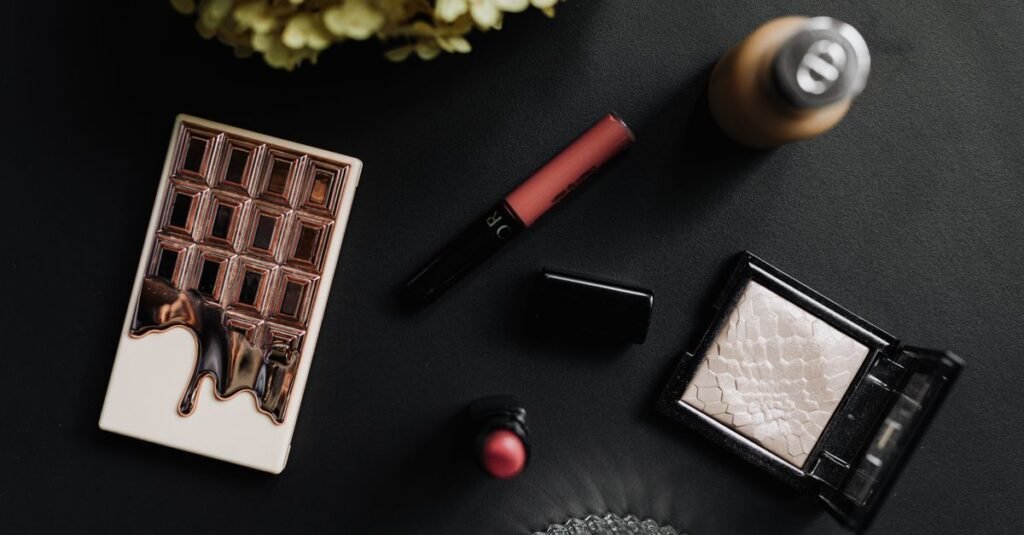
The sequence that makes each layer help the next: skincare (moisturizer, sunscreen — then a genuine setting pause), primer only if your face has a primer-shaped problem, base (foundation or tinted moisturizer), concealer where needed, powder only where you shine, then color — bronzer, blush, highlight — then eyes, brows, and lips in whatever order you enjoy, sealed with setting spray on long days.
Two structural notes beginners deserve upfront: powder products go over cream products, not under, or everything pills; and eye makeup BEFORE base is the professional’s trick whenever dark shadows are involved — fallout wipes cleanly off bare skin.
That single paragraph resolves half the “why does my makeup look wrong” questions this library receives. The other half is shade matching — next.
The Base: Where Every Look Is Won or Lost
Undertone First, Everything Else Second
Before any foundation purchase, settle your undertone — the cool, warm, or neutral cast beneath your skin’s surface color. Vein color, jewelry flattery, and white-vs-cream tests all triangulate it, and our undertone guide walks the full diagnosis. A foundation matched to depth but not undertone is why faces turn orange or ashen at noon.
Coverage Honesty
Choose coverage by the day, not the aisle: tinted moisturizer or skin tint for good-skin days, medium buildable for most wear, full coverage for events and photographs. The modern direction is lighter — skin that looks like skin — and thin layers of a medium formula can do all three jobs.
Application, Ranked
Fingers for skin tints (fast, warm, blends naturally), a damp sponge for medium-to-full (presses product in, eats excess — our sponge roundup covers the good ones), brushes for speed and higher coverage. Whatever the tool: work from the center of the face outward, and press rather than drag. The full technique lives in our foundation guide.
When It Goes Wrong
Cakey, patchy, separating base has exactly five causes — dry skin under it, too much product, wrong-formula pairs, skipped setting time, or powder overload — and our cakey makeup autopsy identifies yours. Primer, the most oversold fix, helps only specific problems: the honest sorting is in our primer guide.
Concealer: The Two-Job Product
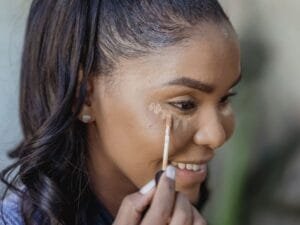
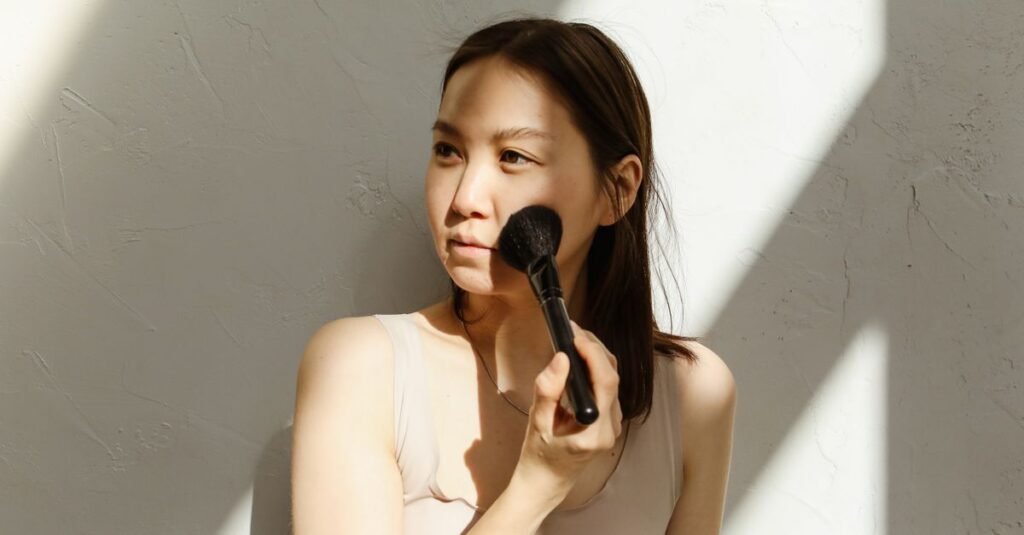
Concealer does two unrelated jobs and most frustration comes from mixing them up. Spot concealing (blemishes, marks) wants a shade matched EXACTLY to your skin, patted only on the spot with a small brush or fingertip, set lightly. Brightening (under-eyes) tolerates a half-shade lighter, applied as a thin triangle and pressed in with a ring finger or damp sponge tip.
The under-eye rules: hydrating eye product first, set it, thin concealer layer second, minimal powder third — creasing is almost always a too-much-product story. And on texture or dark marks, remember the color-theory shortcut: a whisper of peach corrector under concealer beats three layers of concealer alone.
Eyes: Placement Beats Palette
Learn Your Eye Shape Once
Every eyeshadow diagram assumes a visible lid and crease — and millions of eyes have neither. If a fold covers your lid, our hooded-eye system relocates every technique to where it actually shows; the open-eye mapping method there is the single highest-value eye lesson on this site.
The Universal Eye Look
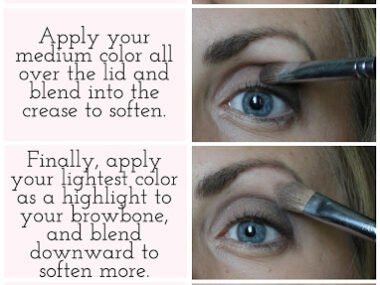
One matte transition shade slightly deeper than skin through the crease zone, a deeper matte on the outer third angled UP, a light shade on the lid, and the inner-corner highlight. That four-step wash flatters every eye, every age, every occasion — master it before any cut crease or glitter experiment.
Liner and Lashes
Liner: thin lines hugging the lash roots (or tightlining for invisible definition), wings drawn open-eyed so they land where they show — the mechanics are in our eyeliner guide. Lashes: curl first, always — technique in the curler guide — then mascara wiggled from the roots per our mascara guide. For events, false lashes add more in photos than any other single step; the tacky-glue secret lives in the false lash manual.
Brows: The Frame
Brushed up, gaps feathered with light hair-strokes, set with gel — ninety seconds that lifts the whole face. The direction of the decade is softer and brushed-up rather than drawn-on; heavy blocked brows age every look they frame.
Professional makeup artist Wayne Goss’s beginner-friendly natural look above is the perfect companion demonstration — nearly every principle in this pillar, executed in ten minutes.
Color: Bronzer, Blush, Highlight
Bronzer returns the warmth that foundation flattened — swept where sun naturally lands (temples, cheek tops, a whisper across the nose) with the technique in our bronzer guide. Choose it one to two shades deeper than skin, matte for sculpting, shimmer for glow days.
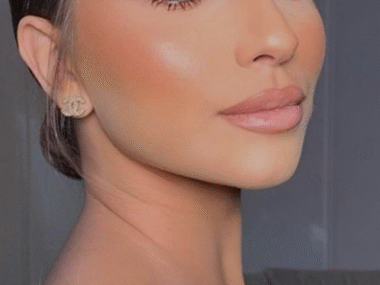
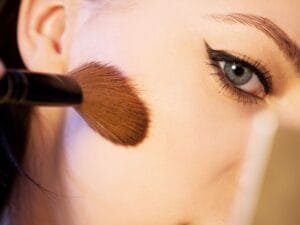
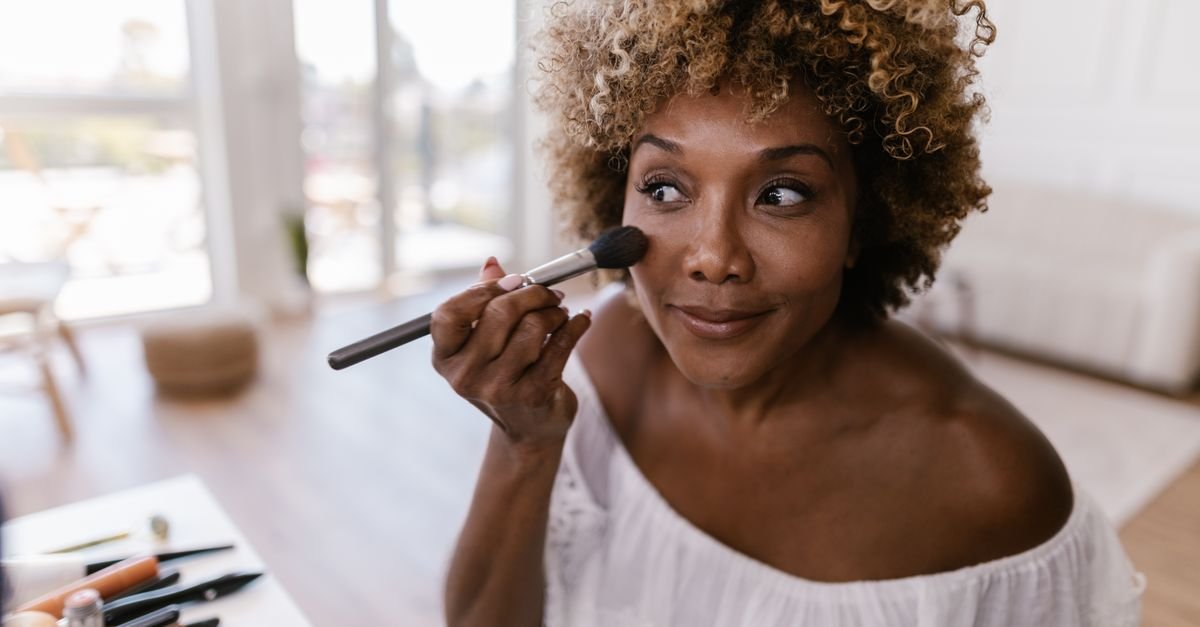
Blush placement follows face shape more than trend: lifted toward the temple flatters nearly everyone, and cream formulas melt into skin more convincingly than powder for anyone over the powder-loving age of twenty-five. Our comparison of cream vs. powder blush settles the format question.
Highlight is a garnish, not a layer: high points only — cheekbone tops, brow bone, inner corner — and finer-milled than the disco era that preceded it.
Lips: The Fastest Transformation in Makeup
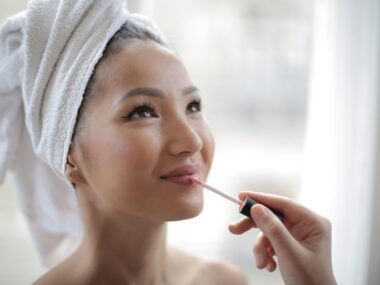
The complete lip education in one paragraph: exfoliated, balmed lips hold everything better; liner matched to lipstick (not darker) stops feathering and doubles wear; the blot-powder-blot sandwich makes any bullet survive dinner; and one confident red or berry, properly lined, upgrades every outfit you own more than any eye look. Formula honesty: liquid mattes wear longest and dry hardest, satins flatter texture, glosses demand reapplication diplomacy.
The Kit: What You Actually Need
The Ten-Item Starter
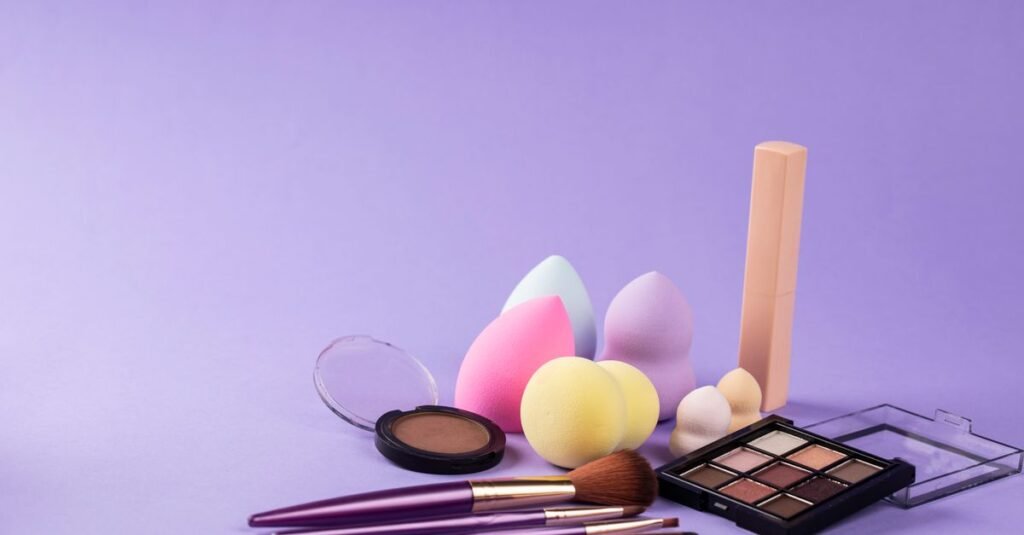
A base you can apply with fingers, one concealer, one neutral eyeshadow quad, one brown or black liner, mascara, brow gel, one cream blush, one lip product you reach for daily, a sponge, and one fluffy brush. That kit executes ninety percent of the looks in this library.
Tools and Their Keep
Five brushes cover everything: fluffy powder, angled blush, flat shader, fluffy blender, small detail. Wash them — weekly for base tools, biweekly for eyes — because a dirty brush applies yesterday’s makeup plus bacteria; the two-minute method is in our sponge and brush cleaning guide.
Expiry Is Real
Mascara three months, liquid liner six, base products a year-ish, powders longer — the full schedule (and the smell-and-texture tells) lives in when makeup expires. Eye infections are the expensive way to learn this section.
Occasions: Scaling the Same Skills
Daily: base, brows, mascara, cream blush, balm — seven minutes. Office and video calls: add concealer and a matte lip; skip shimmer, which cameras exaggerate. Events and parties: the full engineering — primer, layered base, the statement choice, setting spray — mapped in our party makeup system and its New Year’s Eve edition. Photos: one shade more depth everywhere (flash flattens), matte over dew, and the flash-selfie test before leaving.
The pattern worth noticing: no occasion demands new skills — only volume adjustments on the same five.
Makeup Meets Skin (The Two-Way Street)
Makeup sits better on managed skin, and skin stays clearer under well-managed makeup. The three intersections that matter: breakout-prone skin wants non-comedogenic bases and scrupulous brush hygiene; textured or marked skin photographs best with thin layers plus spot work, never spackle; and EVERY makeup day ends with real removal — waterproof formulas get the dissolve-first treatment in our removal manual, and the skin-repair side lives in our companion skincare routine pillar.
Sleeping in makeup once is a mistake; as a habit it is a skincare tax makeup never intended to charge.
The Mistakes Everyone Makes (A Judgment-Free Autopsy)
Matching foundation to the hand instead of the jaw. Skipping the setting pause between skincare and base. Applying eyeshadow eyes-closed and judging it eyes-closed. Dragging liner through the wing instead of stamping it open-eyed. Powdering the whole face when only the T-zone shines. Buying trend tools before mastering the sponge. Blaming products for what technique — or expiry — caused.
Every one of these is a one-week fix, and every one is covered by a guide linked on this page. That is what this pillar is for.
Makeup Through the Decades (Same Skills, Shifting Settings)
Technique is ageless; calibration is not. The twenties can wear anything and mostly need less than they buy — this is the decade to learn the five core skills on forgiving canvas.
The thirties meet the first texture questions: creams begin outperforming powders, thin layers stop being advice and start being law, and the under-eye earns its hydration-first protocol.
The forties and beyond invert several younger rules: luminous finishes flatter where mattes settle, less product placed precisely beats coverage everywhere, brows softened and lifted do the work liner used to, and lips warm rather than darken. The recurring principle: as skin gains history, makeup’s job shifts from painting to lighting — and lighting is a less-is-more art.
Mature-skin specifics worth naming: hydrating primers earn genuine keep here, powder stays in the T-zone only, and cream blush placed slightly higher restores the lift gravity borrowed. None of this is corrective — it is the same craft, tuned to the canvas it serves.
The Two Faces Everyone Actually Needs
Most makeup lives are two looks deep, and mastering exactly two beats sampling twenty.
The five-minute face — the daily workhorse: skin tint or concealer-where-needed, brows brushed and set, curled lashes plus one mascara coat, cream blush pressed on with fingers, tinted balm. Practiced, it genuinely takes five minutes, survives a workday, and reads as “rested” rather than “made up.” This face is also the correct video-call face — cameras exaggerate shimmer and flatten matte, so satin finishes and a touch more blush than instinct suggests.
The occasion face — the same architecture at event volume: full base engineering (primer earning its slot, layered coverage, setting spray), the one-statement rule (eyes OR lips lead, never both shouting), and the longevity kit in the clutch. Every element scales from skills the five-minute face already built — which is why the daily practice IS the event rehearsal.
The wardrobe insight that saves the most money: build both faces completely before buying anything for a third. The gap in most collections is not a missing product; it is an unpracticed skill wearing a shopping list.
Shade Matching Across Every Skin Tone (The Section Brands Skip)
Deep skin tones carry two extra shade-matching realities the counter rarely explains. First, undertone variety is wider — golden, red, olive, and neutral casts all live under “deep,” and a mismatched undertone reads ashy (too grey) or orange (too warm) faster than on lighter skin. Test on the jaw AND the forehead; many deep complexions carry two zones.
Second, the one-foundation assumption fails most often here: a two-shade wardrobe (deeper for perimeter and summer, lighter for center and winter) mixed as needed outperforms any single bottle’s compromise.
Color products follow their own deep-skin physics: sheer pastels vanish, jewel tones and rich berries sing, bronzer needs genuine depth rather than shimmer, and the peach-to-orange corrector family (per the concealer section) neutralizes blue-toned circles that beige correctors turn grey.
Fair skin runs the mirror-image errors — overly warm bronzers going muddy, “universal” reds overwhelming — and olive undertones, beauty’s most under-served cast, usually match best in brands offering true olive lines rather than warm-adjusted beiges. The universal rule: the industry averages; your face is specific. Test in daylight, wear a swatch for a day, and let no label adjective outrank the jawline verdict.
Frequently Asked Questions
What makeup should a beginner start with?
Ten items: an easy base, concealer, neutral eyeshadow quad, one liner, mascara, brow gel, cream blush, one daily lip product, a sponge, and a fluffy brush. Master those before expanding — skills transfer, purchases don’t.
What order does makeup go on?
Skincare and sunscreen (set fully), primer if needed, foundation, concealer, powder where you shine, bronzer and blush, eyes and brows, lips, setting spray for long days. Creams before powders, always.
Why does my makeup look cakey or patchy?
Five causes: dry skin underneath, too much product, incompatible formulas layered, no setting time, or powder overload. Thin layers over hydrated, set skin fix most cases within a week.
How do I find my foundation shade?
Determine your undertone first (cool, warm, neutral), then match depth by testing on the jawline in daylight — the swatch that disappears wins. Undertone mismatch, not depth, causes most orange and ashy failures.
Do I really need primer and setting spray?
Only if your makeup has the matching problem: primer for texture, oil, or noon slide; setting spray for long days and events. Well-prepped skin under light makeup often needs neither.
How long should makeup take every day?
A practiced daily face runs five to ten minutes — base, brows, mascara, blush, lips. If yours takes thirty and still frustrates, the fix is usually fewer products and two technique corrections, not more of either.
Troubleshooting by Symptom (The Quick-Reference Clinic)
Foundation turns orange by afternoon: oxidation meeting the wrong undertone — go one shade truer and one step cooler, and set the T-zone where oil accelerates the shift.
Concealer creases within the hour: too much product over unset hydration — thinner layer, longer eye-cream pause, powder pressed once with a puff.
Blush vanishes by lunch: powder over unset base or bare skin — switch to cream pressed into a tacky base, powder blush layered over it for events.
Mascara prints dots under the brow: lashes hitting skin before drying — curl first, wipe the wand, and let the first coat set before the second.
Lipstick feathers into fine lines: missing liner and over-creamy formula — line the full lip, blot harder, choose one notch drier.
Everything looks grey in photos: flash meeting too-light concealer and SPF flashback — match true, correct with peach, and run the flash-selfie test before leaving.
The pattern in the clinic: nearly every symptom traces to layer order, quantity, or undertone — the same three fundamentals this whole page began with.
Practice, Deliberately (How Skills Actually Arrive)
Makeup improves like handwriting: through short, repeated, low-stakes practice — not through event-morning ambition. The routine that builds hands fastest: one quiet evening weekly, full look, then removed — the removal is half the lesson, teaching what each layer was doing. One new skill per month, drilled inside the daily face until boring. And the phone camera as coach: a straight-ahead photo in window light after each practice, compared monthly — the progress the mirror hides, the camera files.
Permission the industry never grants: you are allowed to be done. A five-minute face executed cleanly is complete makeup literacy — everything past it is hobby, and hobbies are optional. The library will be here whichever way you grow.
The Reader’s Map (How to Use This Library)
This pillar is the index; the depth lives one click away. Start where your mirror complains: base misbehaving → the foundation, cakey, and primer guides; eyes disappearing → the hooded-eye system and liner mechanics; events looming → the party and NYE playbooks with their survival kits; tools suspect → the cleaning and expiry schedules. Each guide runs the same honest method — technique before product, evidence before trend, and one skill drilled at a time. Bookmark this page, and let the season’s question pick the next chapter; two hundred posts in this cluster exist so that no mirror complaint ever lacks its manual.
One closing calibration: the looks you admire in photographs were built in twenty minutes by practiced hands on prepared skin under chosen light — three of those four advantages are learnable from this page, and the fourth is a window. Start with the five-minute face tomorrow morning; the library handles everything after.
The Bottom Line
Makeup is a skill stack, not a product stack: prepped skin, matched undertones, thin layers, honest blending — and a library of specific techniques (all linked above) for the day each one becomes relevant.
Start with the ten-item kit and the five core skills. Add complexity only when a real occasion demands it. Wash the brushes.
Two hundred posts in this cluster serve one sentence: makeup should look like you, on your best-lit day — and now you have the map.

 Adhorika Khan