 Adhorika Khan
You know the face in the morning mirror — pillow lines, half-open eyes, and two puffy little cushions where your under-eyes should be. Morning puffiness is almost always fluid: overnight, lying flat lets fluid pool in the loose tissue under the eyes, and salt, alcohol, allergies, and crying all add to the pool. It drains on its own within hours — and cold, elevation, and a few habit changes speed it dramatically. Permanent under-eye bags are a different animal: age-related fat and skin changes that skincare can disguise but not remove.
Puffiness vs. bags — fluid vs. structure — is the distinction this whole topic turns on. Get it right and you’ll stop wasting money in exactly the aisle designed for people who got it wrong.
Key Takeaways
- Morning puffiness = pooled fluid — it drains within hours and responds to cold, elevation, and less salt.
- Permanent bags = structure (shifted fat pads, laxer skin with age) — creams camouflage; only procedures truly change them.
- The fast fixes that work: cold compress, an extra pillow, morning caffeine eye products, and rinsing allergens away.
- The overnight culprits: salty dinners, alcohol, allergies, rubbing, and sleeping face-down.
- Sudden, persistent, or one-sided swelling is a doctor visit, not a skincare mission.
Why Do Eyes Get Puffy Overnight?
The under-eye area is anatomically perfect for puffiness: the skin there is the thinnest on your body, the tissue beneath is loose, and the lymphatic drainage is lazy at the best of times. Spend seven horizontal hours and gravity stops helping fluid drain downward — it settles in the loosest available pocket, which is exactly under your eyes.
Anything that increases fluid retention amplifies it: a salty dinner (your body holds water to dilute the sodium), alcohol (dehydration triggers rebound water-hoarding), crying (tears are salty and the rubbing inflames), allergies (histamine makes vessels leaky), and simple genetics — some faces are simply puffier by design, and that’s morphology, not failure.
Puffiness or Bags? The 3 O’Clock Test
Check your eyes mid-afternoon. If the swelling is gone by lunch, you have fluid puffiness — everything in this guide applies and works. If the pouches look identical at 8 a.m. and 8 p.m., day after day, you’re looking at structure: with age, the fat that cushions the eyeball pushes forward through weakening support tissue while skin loses elasticity. That’s not fluid, and no cucumber has jurisdiction over it.
Most people over thirty have some of each — a structural baseline that fluid makes worse by morning. You can still win meaningfully: drain the fluid component and even structural bags look visibly better.

The Morning Rescue Routine (Ten Minutes)
1. Cold, Applied Correctly
Cold constricts vessels and pushes fluid out of the tissue — it’s the single fastest de-puffer. Options in ascending elegance: a cold spoon from the freezer (two minutes per eye), a washcloth-wrapped ice pack, chilled gel eye masks, or refrigerated gua sha/roller tools. Keep everything wrapped or smooth — the goal is cool pressure, not frostbite on the body’s thinnest skin.
2. The Gentle Drain
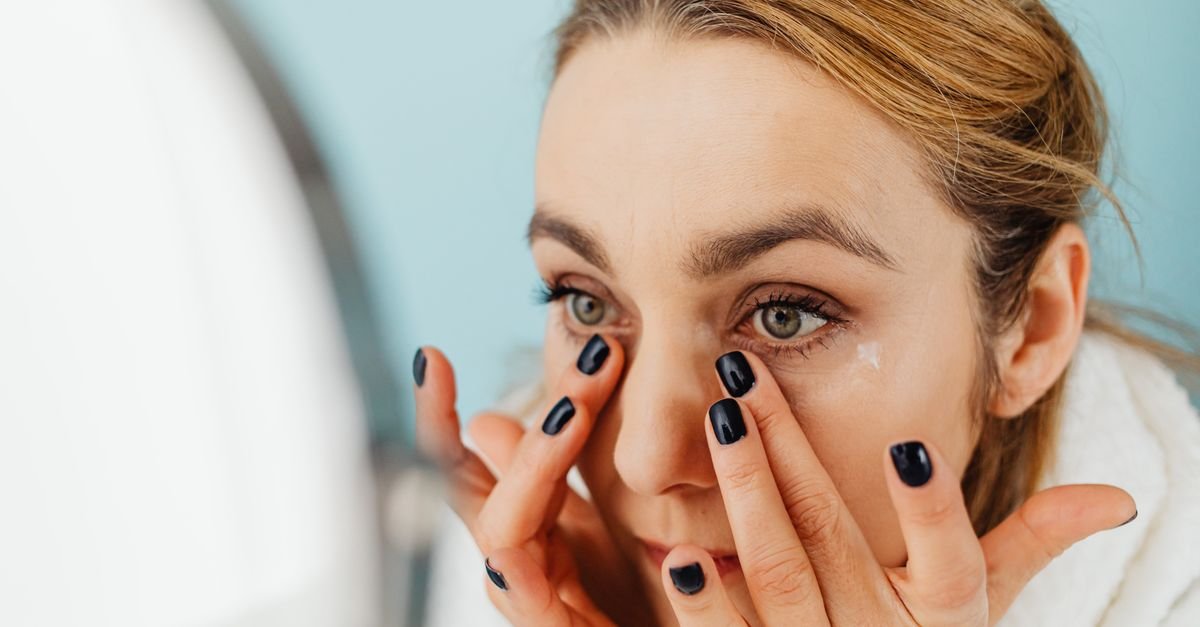
With a drop of eye cream or facial oil for slip, sweep a ring finger or cool roller from the inner corner outward toward the temple, then down toward the ear — five or six light passes per side. You’re escorting pooled fluid toward working lymph channels. Feather-light is the rule; dragging thin skin trades today’s puff for tomorrow’s lines.
3. Caffeine, Topically
Caffeine constricts vessels through the skin — it’s the one “de-puffing” ingredient with honest short-term evidence, which is why it anchors most morning eye serums and those gold under-eye patches. Real but temporary: think hours, and think “takes the edge off” rather than “deflates.” Chill the product for a two-in-one.
4. Cool Water Finish
A cool-water face rinse (especially after allergy-season nights — it rinses pollen off lids and lashes) plus upright time. Standing up is itself a treatment: gravity resumes drainage the moment you’re vertical, which is why puffiness fades by mid-morning even when you do nothing.
Tonight’s Prevention List (Where the Real Wins Live)
Add a pillow. Sleeping with your head slightly elevated keeps fluid from pooling — the cheapest structural fix in all of skincare. Back-sleeping helps too; face-down sleepers press fluid directly into the under-eye pocket.
Audit the evening sodium. The takeout-dinner-to-puffy-morning pipeline is extremely reliable. You don’t need a low-salt life — just notice which dinners cost you a morning face.
Alcohol with water alongside, and not as a nightcap — dehydration-then-rebound-retention is a puffiness recipe.
Treat the allergies. If mornings come with itchy, watery, puffy eyes in season, an evening antihistamine (ask your pharmacist), washing pillowcases hot and often, and showering before bed change everything. Rubbing itchy eyes inflames lids and thickens the puff — the hardest habit on this list to break and one of the most rewarding.
Remove eye makeup completely, gently — residue is a low-grade overnight irritant; scrubbing at waterproof mascara is a manual one.

Do Eye Creams Actually Work on Puffiness?
Honest tiering: caffeine serums — real short-term de-puffing. Cooling textures and metal applicator tips — the temperature does the work, pleasantly. Hyaluronic acid and peptides — hydrate and smooth the skin over the puff, improving appearance without draining anything. Retinol eye products — long-game skin thickness and firmness, which flatters structural bags slightly; nothing to do with fluid (our retinol guide covers eye-area caution). “Instant lift” film-formers — a temporary tightening film that can visibly smooth bags for hours; legitimate as event makeup, misleading as skincare.
No cream relocates a herniated fat pad. Anyone promising surgical results in a jar is selling the jar. For the companion problem — discoloration rather than swelling — our dark circles guide covers that separate science; the niacinamide and hydration layers work on both.
What Actually Fixes Structural Bags?
When fat-pad prolapse is the story, the honest options are procedural: tear-trough filler camouflages the valley between bag and cheek (temporary, technique-sensitive, choose injectors conservative by reputation); lower blepharoplasty — the definitive surgical fix, repositioning or removing the fat through a hidden incision, with results measured in decades; and energy-based skin tightening for mild laxity. None of this is urgent — bags are cosmetic, not medical — but knowing the real menu prevents years of expensive jar-based disappointment.
The Lifestyle Layer: Sleep, Screens, and Stress
Short or poor sleep reliably worsens morning puffiness (and its cousin, dark circles) — fluid regulation and cortisol both misbehave. Late-night screens keep you up and encourage eye-rubbing; the fix is boring and works. Regular exercise improves circulation and lymphatic flow full-body — puffy mornings are one more small argument for the walk you were already considering. None of these are “hacks”; they’re the terrain the quick fixes sit on.
When Puffy Eyes Mean See a Doctor
Skincare’s jurisdiction ends at these flags: sudden severe swelling, especially one-sided (allergic reaction, infection); pain, heat, or redness of the lid (possible infection — same-day care); persistent all-day swelling that’s new for you, particularly with morning face puffiness elsewhere or swollen ankles (thyroid, kidney, and heart conditions can announce themselves through fluid retention); and itchy-swollen eyes unresponsive to antihistamines. These are uncommon — but the under-eyes are where the body posts notices, and new-and-persistent always earns a professional read.
The Contact Lens, Screen, and Salt-Sensitivity Notes
Three smaller populations, three targeted notes. Contact lens wearers: overworn or under-cleaned lenses irritate eyes into low-grade puffiness — if lids are chronically swollen and you sleep in lenses, the experiment is a week in glasses. Heavy screen users: reduced blink rates dry the eyes, drying invites rubbing, and rubbing feeds the puff; the 20-20-20 rule (every 20 minutes, 20 seconds looking 20 feet away) plus artificial tears breaks the chain at its first link. The salt-sensitive: some people puff dramatically from sodium loads that others shrug off — if your face reliably reports every restaurant meal, you’re in this group; it’s not an allergy, just physiology worth planning around on photo-day eves. Small audiences, but if you’re in one, that single fix may outperform everything else in this guide.
And Yes: The Cucumber Question
Cucumber slices are the genre’s mascot, so here’s the honest verdict: they work — as cold compresses. Chilled cucumber is 96% cool water in a convenient eye-sized disc; the vegetable itself contributes essentially nothing a refrigerated spoon or gel mask doesn’t. Enjoy the ritual if it makes the routine pleasant (pleasant routines get repeated, which matters more than ingredients), but know you’re paying for temperature, not botany. The same logic covers cold tea bags, chilled rollers, and every frozen kitchen improvisation.
Your Two-Week De-Puff Experiment
Every night: extra pillow, real makeup removal, water with any alcohol, note the dinner. Every morning: two minutes of cold, thirty seconds of outward sweeps, caffeine eye serum if you have one. Day 14: compare morning photos. Most fluid-puffiness improves visibly on this protocol alone — and whatever remains at day fourteen, unmoved and constant, is your honest structural baseline: camouflage it, book a consult about it, or — entirely valid — befriend it. Puffy mornings are among the most universal human experiences; the goal is comfort, not porcelain.
Jade Rollers, Gua Sha, and Massage Tools: The Honest Read
The tools work — for the fluid kind, for a few hours, mostly because they combine the two proven mechanics: cold (stone stays cool, especially fridge-chilled) and directional massage (encouraging lymphatic drainage). A chilled roller under the eyes genuinely takes the morning edge off.
What they don’t do is anything permanent: no “sculpting,” no collagen, no fat-pad relocation. Buy one if the ritual makes the routine pleasant enough to keep — consistency is the actual active ingredient — and clean it weekly (a tool dragged across lids collects what tools collect). The ring finger remains the free, always-available version.
Makeup While You Wait: De-Emphasizing the Puff
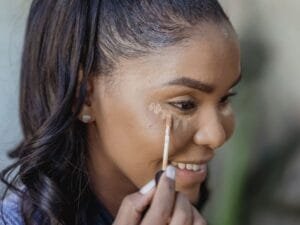
On mornings when biology outvotes the routine, makeup strategy helps: skip shimmer and thick concealer layers on the puffy pillow itself (light-catching product volumizes what you’re minimizing) and place a small amount of concealer only in the shadow line beneath the puff — erasing the shadow flattens the whole area visually. Set lightly; heavy powder creases into the fold and announces it. Curled lashes and a defined brow pull attention up and away. Five careful minutes beats fifteen minutes of spackling.

Whole-Face Morning Puffiness: The Bigger Picture
If the eyes are just the headline on a generally puffy morning face, the same physics applies face-wide — salt, alcohol, horizontal hours — and the same fixes scale up: the cool rinse, ten upright minutes with water or tea, and patience. A whole-face morning routine of brief cool water and light massage while your coffee brews handles it gracefully.
The flag worth repeating: new, persistent all-day facial puffiness — especially with rings tightening, ankles swelling, or unusual fatigue — is a body-fluid question for a doctor, not a skincare question. The morning-only version that drains by ten is just being a mammal who sleeps lying down.
The small honest toolkit:
The small honest toolkit:
Frequently Asked Questions
How do I get rid of puffy eyes fast?
Cold is fastest: a wrapped ice pack, chilled gel mask, or cold spoons for two minutes per eye, followed by gentle outward sweeps with a ring finger and an upright posture. Caffeine eye serum adds a few hours of tightening.
Why are my eyes puffy every morning?
Lying flat lets fluid pool in the loose under-eye tissue overnight — amplified by salty dinners, alcohol, allergies, and face-down sleeping. If it drains by midday, it’s normal fluid puffiness, not a medical problem.
Do tea bags really work on puffy eyes?
Somewhat — but mostly because they’re cold and caffeinated. A chilled caffeine eye serum or cold compress does the same job more hygienically than a soggy bag over your eye.
What’s the difference between puffy eyes and eye bags?
Puffiness is fluid that comes and goes (worst in the morning); bags are a permanent structural change where under-eye fat pushes forward with age. Cold and lifestyle fix the first; only procedures genuinely change the second.
Does drinking more water help puffy eyes?
Indirectly, yes: good hydration discourages the salt-driven water retention that fuels overnight puffiness. But water alone won’t drain existing puffiness — cold, elevation, and time do that.
Can an eye cream remove under-eye bags?
No cream repositions the fat pad that creates true bags. Caffeine creams reduce fluid puffiness for a few hours, and retinol slightly firms skin over time — useful, but structural bags are filler-or-surgery territory.
When should I worry about eye puffiness?
Sudden severe or one-sided swelling, pain or redness, or new all-day puffiness that doesn’t drain — especially with swelling elsewhere — deserves a doctor. Ordinary morning puffiness that fades by noon is benign.

 Adhorika Khan