 Adhorika Khan
No feature does more facial heavy-lifting per square centimeter than eyebrows — they frame the eyes, balance the face, and communicate half your expressions. Which is why getting them wrong is so visible, and why the internet’s brow advice swings between over-plucked panic and Instagram-brick extremes.
Quick answer: good brows are your natural brows, tidied and filled — not redrawn. Map three points with any straight edge (start above the nostril’s outer edge, arch on the diagonal past the iris, tail on the nostril-to-eye-corner line), remove only the strays outside that map, and fill sparse zones with light, hair-like strokes in the direction of growth. Brush up, set with gel, stop while it still looks like hair.
The complete guide: mapping, shaping without regret, filling for every product type, and fixing the over-plucked years.
Key Takeaways
- Map before anything: the three-point method (start, arch, tail) turns guesswork into geometry — and your bone structure, not a trend, sets the map.
- Remove less than you think: pluck only clear strays outside the mapped shape; over-tweezing is the one brow mistake that can outlast the trend that caused it.
- Fill with strokes, not blocks — short, upward, hair-mimicking marks in a shade matching your brow (or one shade lighter), always finishing softer at the front.
- Brush and set: a spoolie and brow gel deliver half the polish for a tenth of the effort.
- Patchy, thinning, or vanishing brows have real fixes — growth patience, makeup technique, and professional options — and sudden loss is a doctor question, not a pencil question.
Know Your Brow Anatomy (Two Minutes of Theory)
Every brow has three zones: the head (the inner square-ish start nearest the nose — should be the softest, most diffused part), the body (the thickest span, riding the brow bone), and the arch-to-tail (the taper — where definition lives and where over-plucking history shows first).
Two truths before any tweezer lifts: brows are sisters, not twins — chasing perfect symmetry removes more hair every round; match the map, tolerate the personality. And brow hair is slow and finite — follicles abused for years (the 90s thin-brow era left witnesses) can stop producing entirely. Conservative is not timid; it is strategic.
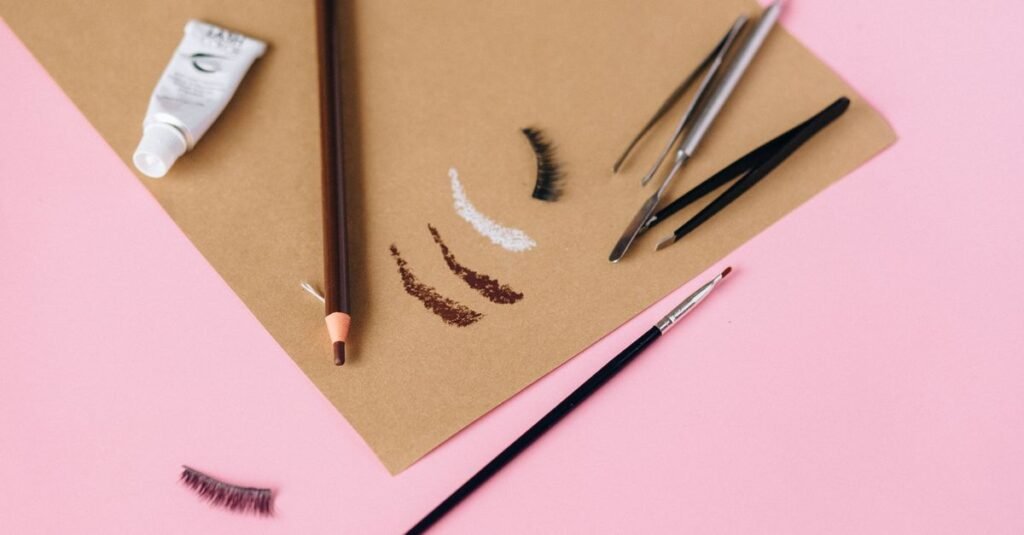
Map Your Shape (The Three-Point Method)
Hold any straight edge — a makeup brush handle works — against three landmarks:
Point one, the start: vertical from the outer edge of the nostril — where the brow should begin. Hairs meaningfully inside that line (toward the nose bridge) are removable; the line itself is sacred, because over-cleaned brow heads read surprised.
Point two, the arch: the diagonal from nostril edge through the outer half of your iris (looking straight ahead) — where the natural peak wants to sit. You are finding your arch, not manufacturing one.
Point three, the tail: the diagonal from nostril edge past the outer corner of the eye — where the brow should end. Tails shorter than this line unbalance the face; tails drawn far past it drag the eye downward.
Mark the three points with brow pencil dots. Everything inside the dots is brow; clear strays outside are fair game. This map flexes naturally with your face shape — longer faces suit flatter, more horizontal brows; rounder faces gain lift from a slightly higher arch — but the landmarks personalize it automatically, which is the method’s quiet genius.
Shaping: Remove Only the Obvious
Tweezing (the precision default)
After a shower (open follicles hurt less), in daylight, with slant-tip tweezers: pull single hairs in the direction of growth, skin held taut. Work the under-brow line and between-brow zone only — the top line of the brow is mostly load-bearing; clean only true outliers above. The step-back rule: every five hairs, step back from the mirror — brows are read at conversation distance, and magnifying-mirror sessions are how good brows disappear five hairs at a time.
Trimming (the underrated half)
Brush all hairs straight up with a spoolie; any hair extending dramatically past the top line gets trimmed — individually, with brow scissors, one conservative millimeter. Never cut across the whole brow in one confident line; that fringe look has no exit strategy.
Waxing and threading (outsourced edges)
Fast, crisp, and best done professionally — DIY facial waxing removes rows, not hairs, and rows do not grow back for negotiation. Book the first appointment with your mapped shape communicated clearly (“clean outside this line only”), then maintain at home between visits.
What about trends?
Laminated-fluffy, skinny, brick-sharp — trends cycle every few years; follicles do not. Rent trends with styling products and makeup; never buy them with removal.
Filling: The Product Ladder
Pencil (precision)
The micro-tip pencil is the stroke tool: short, light, upward flicks in the direction the local hair grows — vertical-ish at the head, angled along the body, following the taper at the tail. Shade rule: match your brow hair or go one shade lighter/ashier; warm-dark pencils are why filled brows read “drawn.” Keep the head barely-touched — gradient front-to-tail is what natural brows do.
Powder (softness)
Angled brush, brow powder, soft pressure — fills sparse zones with a diffused shadow rather than lines. The most forgiving format for beginners and mature skin, and the fastest everyday fill.
Pomade (definition)
High pigment, waxy hold — crisp tails and dramatic definition for photos and events. High skill ceiling: a light hand and a spoolie-soften after are mandatory, or the brick arrives.
Tinted gel (speed)
Mascara for brows: brush up and through, hairs tinted and set in twenty seconds. The busy-morning champion, and often the entire routine for full-but-pale brows.
Micro-pen and stroke tools
Fine-fork tips draw individual faux hairs — superb for gaps and scars, used sparingly over a powder base.
The universal finisher: spoolie-brush everything upward and outward after filling (blends strokes into hair), then set with clear or tinted gel. Setting is the difference between 9 a.m. brows and 5 p.m. brows.
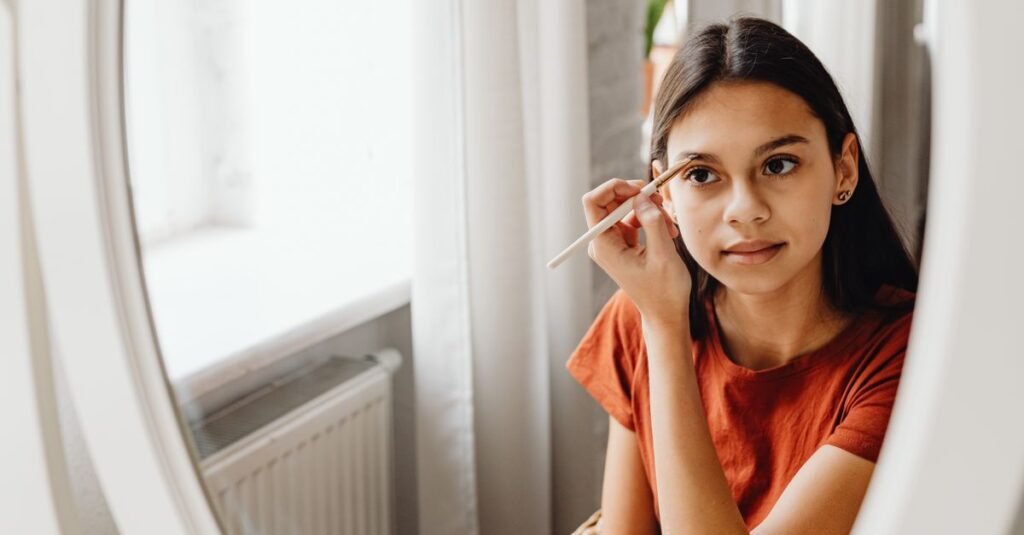
The Five-Minute Everyday Routine
Brush up with the spoolie (30 seconds). Fill only the genuinely sparse zones with pencil or powder — usually the tail and one gap (two minutes). Soften the front with whatever is left on the brush (30 seconds). Set with gel, brushing the head upward and the tail along its line (one minute). Step back, check at distance, resist the urge to add more. Done — brows that read as “good brows,” not “brow makeup,” which is the entire assignment.
Fixing the Problem Brows
Over-plucked or gappy from the thin years
Commit to a three-month tweezer fast (hide them if necessary) — regrowth arrives in awkward waves; brush and gel it into the shape rather than “tidying” it away. Fill gaps with strokes meanwhile. Castor-oil folklore is harmless but unproven; serums with proven growth actives exist — effective for many, with the caveat that prostaglandin-analog serums have real side-effect fine print worth reading (and a dermatologist conversation for the cautious).
Sparse tails on mature brows
Brows thin from the tail inward with age — powder-plus-pencil rebuilds them softly; skip harsh pomade lines, which age the face they are drawn on. A slightly shorter, softer tail flatters more than a drawn-long sharp one.
Unruly, wiry brows
Trim conservatively (the brush-up method), then lamination-style setting gels — the brushed-up-and-frozen look domesticates wire better than removal ever will.
Sudden or patchy loss
Brows falling out in patches, alongside lash or hair loss, or with skin changes is a medical sign (thyroid, alopecia, dermatitis) — a doctor visit outranks every product in this guide.
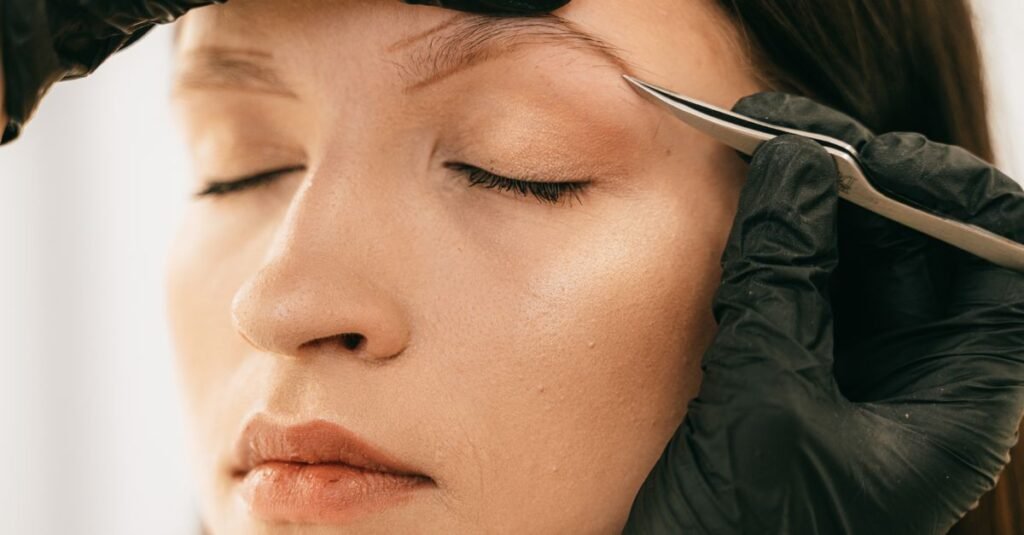
Professional Options, Honestly Ranked
Brow tinting (salon or careful home kits): darkens pale hairs and captures peach fuzz — two to four weeks of “woke up filled.” Cheap, low-risk, underrated. Lamination: a perm that sets hairs brushed up and fluffy for about six weeks — glorious on full-but-flat brows; skip on sparse or fragile ones (it stresses hair). Microblading and machine brows (PMU): semi-permanent tattooed strokes — transformative for genuinely sparse brows, entirely artist-dependent, fades over 1–3 years, and healed results vary with skin type (oily skin blurs strokes). Research portfolios of healed work, verify licensing and hygiene, and treat cheap deals as the red flag they are — this is your face, semi-permanently. Threading/waxing subscriptions: the maintenance outsource — worth it if your home-tweezing discipline is honest about itself.
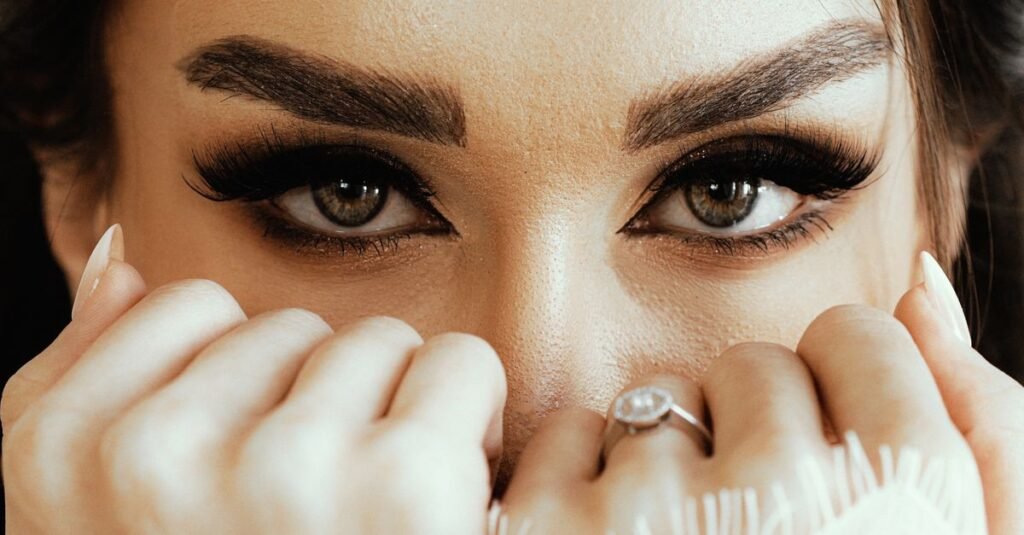
Common Brow Mistakes
Magnifying-mirror marathons — brows are a conversation-distance feature; judge them there. Matching the “better” brow — the symmetry chase always ends thinner. Dark, warm pencil dragged from the head — instant angry-brow; start strokes mid-brow and feather forward last with almost nothing. Over-cleaning above the brow — the top line creates the lift; respect it. Brick-sharp edges everywhere — crisp tail, soft everything else. Trend-chasing with tweezers — rent with makeup, never buy with removal. Skipping the spoolie and gel — unset filled brows migrate by lunch and read drawn from the start.
Frequently Asked Questions
How do I find my natural eyebrow shape?
Map three points with a straight edge from the nostril: vertical for the start, through the outer iris for the arch, to the eye’s outer corner for the tail. Everything inside those landmarks is your natural shape — tidy only outside it.
Should I pluck above my eyebrows?
Only clear, obvious strays well above the line. The upper brow edge creates the face’s lift, and over-cleaning it flattens and lowers the whole eye area.
What is the most natural way to fill in eyebrows?
Short, light, hair-direction strokes with a micro-tip pencil (or soft powder shading) in your exact shade or one lighter, kept minimal at the brow head, brushed through with a spoolie, and set with gel.
How long does it take over-plucked eyebrows to grow back?
Visible regrowth starts in weeks, a meaningful shape rebuild takes three to six months, and long-abused follicles may return partially or not at all — which is why the tweezer fast plus patience (and possibly a growth serum, researched carefully) is the standard rehab.
Is microblading worth it?
For genuinely sparse or vanished brows with a skilled, verified artist — it can be life-improving. It is also semi-permanent, artist-dependent, and ages with your skin; healed-work portfolios and licensing checks are non-negotiable homework.
Pencil, powder, pomade, or gel — which should I buy first?
A spoolie-tipped micro pencil in your shade plus a clear gel covers ninety percent of brow needs. Add powder for softness or tinted gel for speed once you know your routine.
Brow Routines by Life Stage
Teens and first-timers: map, remove only the between-brow strays, and learn the spoolie before any pencil — the habit of restraint set now pays for decades (and the over-plucking cautionary tales are one search away). Twenties and thirties: full experimentation territory — tints, lamination, and product play, with the map as the guardrail trends cannot move. Forties onward: brows thin from the tail and lighten — powder-first filling, a shade warmer than expected reads softer than dark-cool pencils, and brushing hairs up before assessing prevents over-removal of what is actually still there. The universal constant: whatever the decade, the three-point map is the same — only the filling strategy ages with you.
The Brow Card
Map: nostril-vertical start, iris-diagonal arch, eye-corner tail. Remove: only clear strays outside the map, five hairs then step back, never the top line’s structure. Fill: hair-direction strokes, your shade or lighter, soft at the head, crisp only at the tail. Finish: spoolie through, gel to set. Rehab: tweezer fast three months, fill the gaps meanwhile, serums researched before bought. Outsource: tint for depth, lamination for fluff, PMU only after healed-portfolio homework. Five minutes a morning — that is the whole discipline.
Brows and the Rest of the Face
Brow decisions ripple: strong filled brows want softer eye makeup (the face supports one headline act — the same balance rule as our eyeliner guide); defined brows plus bold lips is the maximal look, so mind the middle; and glasses wearers get a free pass on brow subtlety since frames absorb attention — a groomed-and-gelled brow often suffices where bare faces want more fill. Photographs read brows heavier than mirrors do, so event brows deserve the one-notch-lighter rule that every other feature reverses. The face is a composition; the brows are its frame — and frames work best when nobody compliments the frame.
The Bottom Line
Great eyebrows are a discipline of restraint: map the shape your bones already chose, remove only what falls outside it, fill with strokes that imitate hair, and set what you built. The trends will keep cycling; your mapped, well-kept natural brows will outlast every one of them — and they take five minutes a morning to maintain.
Tweeze less, brush more, and step back from the mirror. That is the entire secret the brow industry keeps repackaging — now it is yours.

 Adhorika Khan